


21 Jul Gray Tap Water on Oahu? Here’s What It’s Telling You
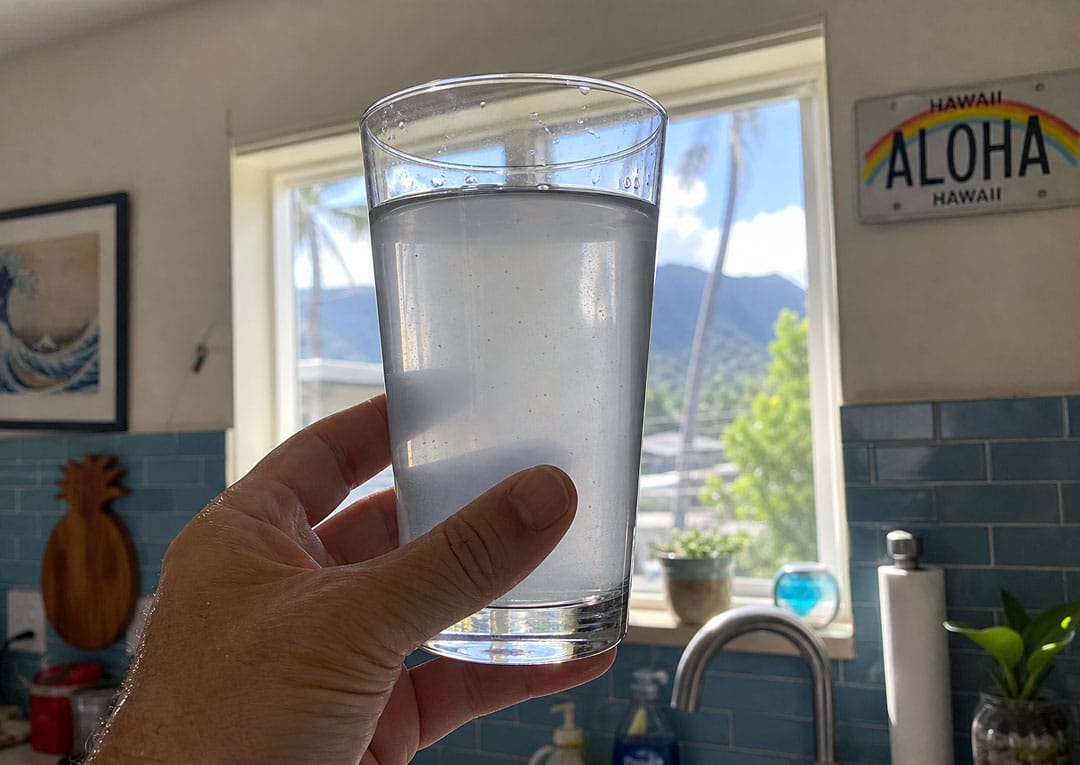
You fill a glass at the kitchen sink and it looks off — grayish, cloudy, almost milky. You hold it up to the light, and it’s clearly not clear. Your first reaction is probably concern, and that’s fair. Water is supposed to be transparent.
Here’s the good news: gray tap water usually doesn’t mean something is wrong. But it does mean something is happening in your plumbing. Knowing what’s actually causing it helps you decide whether to wait a few minutes, flush a fixture, or pick up the phone.
On Oahu, we get calls about gray or cloudy tap water regularly — and the causes here aren’t always the same ones a mainland homeowner would run into. Hawaii’s water infrastructure, older pipe materials, water heater wear, and mineral-rich water all shape what shows up at your tap. This guide walks through every likely cause, from the completely harmless to the ones worth a plumber’s eyes.
The 60-Second Test: Does the Gray Clear?
Before anything else, try this. Fill a clear glass from your tap and set it on a flat surface. Watch it for 60 to 90 seconds.
| What you see | What it means |
|---|---|
| Clears from the bottom up | Trapped air — harmless, temporary |
| Stays uniformly cloudy or leaves residue | Minerals or sediment — worth investigating |
| Gray only when the water is hot | Water heater sediment |
| Doesn’t change, with a yellow or brown tint | Aging pipes — call a plumber |
If the gray clears from the bottom up — starting clear at the bottom and turning transparent as you watch — you almost certainly have trapped air. This is the most common cause of gray or milky water on Oahu, and it’s completely safe.
This one test rules out the least serious cause within two minutes. It saves you unnecessary worry — and, just as often, unnecessary delay.
The 5 Common Causes of Gray Tap Water on Oahu
Here’s a quick map before we dig into each one.
| Cause | Tell-tale sign | Seriousness |
|---|---|---|
| Trapped air | Clears bottom-up in under a minute | Harmless |
| Water heater sediment | Gray on the hot side only | Low — maintenance |
| Hard water | Hazy; leaves white film or scale | Low — long-term wear |
| Galvanized and/or aging pipes | Gray-brown tint, older home | Serious — call a plumber |
| BWS main work | Neighbors affected too; clears in hours | Temporary |
Cause #1: Trapped Air in Your Lines (Very Common, Harmless)
Dissolved air is the single most frequent reason we get calls about gray or milky water on Oahu. It looks alarming — the water can resemble diluted milk — but it’s completely safe and clears on its own.
Here’s what’s happening: water under pressure holds dissolved gases — mostly oxygen and nitrogen — the same way a carbonated drink holds CO2. When water moves from the high pressure of the main lines into the lower pressure inside your home, those gases come out of solution as millions of tiny microbubbles. Together they create that grayish-white, opaque look.
On Oahu, this tends to show up:
- After plumbing work — repairs, fixture swaps, or a water main shutoff and restore. Any time air enters the lines and gets re-pressurized, it dissolves and then re-emerges at your tap.
- During Board of Water Supply work in your neighborhood. Pressure swings from their activity can introduce air into residential lines, and you won’t always get direct notice.
- After returning from travel. If the water sat unused for a while, the air-to-water balance in your lines can shift when flow resumes.
What to do: Let the tap run for two to three minutes at full flow. You’re pushing the air-saturated water out and pulling fresh supply in. Most of the time the cloudiness clears completely. If it hasn’t cleared after about five minutes of running, you’re probably dealing with something other than air.
Cause #2: Water Heater Sediment (Very Common in Hawaii)
If the gray water shows up on the hot side only — cold looks fine, hot looks off — your water heater is the likely source. This is extremely common on Oahu, and it tends to sneak up on homeowners because it builds slowly.
Oahu’s water carries higher concentrations of dissolved minerals than many mainland cities. Calcium, magnesium, and silica occur naturally in it. Each time water heats and cools inside your tank, some of those minerals fall out of solution and settle as sediment on the bottom. That layer insulates the heating element from the water, forces the heater to work harder, shortens its life, and eventually shows up in your hot water.
You’ll often notice the gray or cloudy quality most when you first turn on the hot water — sediment stirred up by the heating cycle gets pushed through the pipes. A slight sulfur or “rotten egg” smell alongside it points to bacterial growth in the sediment layer — a clear sign the tank needs attention.
What to do: A water heater flush is the first step — draining the tank to clear the sediment off the bottom. For a standard tank heater on Oahu, plan on roughly once a year, more often with harder water or if it’s been a while. If flushing doesn’t fix it, or the buildup is heavy, a plumber may recommend a full drain and descale. In tanks 10 years or older, recurring sediment often means the heater is near the end of its life — and on Oahu, our water chemistry and climate tend to push tank heaters to fail closer to the 8–10 year mark than the 12–15 years manufacturers quote.
Cause #3: High Mineral Content (Hard Water)
This one is specific to Oahu’s water supply. Our water measures higher in minerals than what most mainland homeowners are used to — enough that homeowners in certain areas notice the effects regularly.
Hard water usually looks milky white or slightly gray, but it behaves differently from air. Instead of clearing completely, the water may stay a little hazy or leave a visible film on the glass after it evaporates. You might also see a chalky white film on glassware out of the dishwasher, scale around faucet aerators, or a filmy feeling on your skin after a shower.
Hard water in Hawaii isn’t a safety issue — it’s fine to drink — but the long-term effects on plumbing and appliances are worth understanding. Mineral scale builds up inside supply lines, aerators, showerheads, and water-using appliances. Over time that restricts flow, drops appliance efficiency, and wears out internal rubber parts faster.
What to do: A whole-home water softener is the most effective long-term fix. It uses ion exchange to pull calcium and magnesium out of your water before it reaches your fixtures, appliances, and water heater. The result is water that looks clearer, feels softer, and is gentler on everything it touches. Point-of-use filters at specific taps are a lower-cost option if your concern is mainly drinking water rather than whole-home mineral management. If you’re not sure hard water is the culprit, a basic hardness test kit from any hardware store gives you a reading in minutes.
Cause #4: Galvanized or Aging Pipes
This cause is less common but more serious, and it tends to produce water that looks gray with a brownish or yellowish tint underneath — more like dirty dishwater than clean, milky air bubbles.
Many of Oahu’s older homes — especially those built before the 1970s in neighborhoods like Kaimuki, Nuuanu, Makiki, and Manoa — were plumbed with galvanized steel supply lines. Galvanized pipe was the standard then: steel coated with a thin layer of zinc to resist corrosion. The catch is that the zinc eventually wears away, exposing the steel to decades of corrosion from Hawaii’s water chemistry and humidity.
Corroding galvanized pipe releases iron and rust particles into your water. The result looks gray, brown, or yellowish — worst first thing in the morning or after any stretch of non-use, when water has been sitting in the pipes. It’s not just cosmetic: corroding pipe also steadily restricts flow, lowers water pressure throughout the home, and signals that the pipe may be close to failure.
What to do: If you suspect galvanized corrosion, this is a call-a-plumber situation, not a wait-and-see one. A camera inspection lets a plumber see the real condition of your lines and give you an honest read on how much life they have left. Homeowners who’ve lived with slowly fading pressure and the occasional bout of discoloration are often surprised how far along the corrosion has gotten.
Replacing galvanized pipe — usually with copper or PEX — is a bigger job, but it’s a permanent fix. It’s not an emergency like a burst pipe. But it also won’t get better on its own.
Cause #5: Municipal Main Work or Pressure Changes
This one isn’t about your plumbing at all — it’s about what’s happening upstream of your home.
The Board of Water Supply runs regular maintenance, repairs, and upgrades across Oahu’s distribution system. When crews open or close mains, flush hydrants, or restore service after a repair, the pressure changes can temporarily stir up sediment in the mains and push slightly turbid water through the neighborhood. That turbidity looks gray or cloudy at the tap and is temporary — usually clearing within a few hours as normal flow returns.
You’re most likely looking at a BWS-related water quality event if:
- Multiple neighbors notice it at the same time
- It appeared suddenly, with no changes to your own plumbing
- It clears on its own within a few hours of running the tap
- The BWS has recently worked in your area — they post service notices and water quality information on the Honolulu Board of Water Supply website
What to do: Run your cold tap for a few minutes. If the cloudiness clears and stays gone, you’re through it. If it persists or keeps returning, the issue is more likely within your own plumbing than in the main supply.
What Color Is the Water, Really? It Matters
“Gray” and “cloudy” cover a range of appearances, and the specific color tells you a lot.
| Color / appearance | What it likely means | Urgency |
|---|---|---|
| Milky white, clears from the bottom up | Trapped air | Safe, temporary |
| Uniformly cloudy, doesn’t clear | Mineral content or sediment | Worth investigating |
| Gray-brown or rusty tint | Corroding galvanized pipe or disturbed main sediment | Call a plumber if it persists |
| Gray only on the hot side | Water heater sediment | Flush the tank |
| Greenish or bluish tint | Copper pipe corrosion (uncommon) | Worth a plumber’s attention |
| Black or dark gray | Manganese, or degrading pipe materials | Get a water test |
When to Call 535 Plumbing
Most gray water issues on Oahu clear up on their own or with simple maintenance — running the tap, flushing the water heater, cleaning an aerator. But these situations call for a licensed plumber:
- The cloudiness or discoloration lasts more than a day without clearing
- The water has any odor — sulfur, metallic, or chemical
- You’re seeing gray-brown or rust-colored water consistently, especially in an older home
- Your water pressure has dropped alongside the discoloration
- The problem is coming from every tap in the house, not just one fixture
We’ve been serving Oahu since 2015, and we’ve seen every version of discolored water the island has to offer. We’ll give you a straight answer on what’s causing it and what — if anything — needs to be done. If it’s harmless, we’ll tell you that too.
📞 Call us at (808) 300-0535. We’re here to help — from Ewa Beach to Kailua, Mililani to Makiki.
Frequently Asked Questions
Is gray or cloudy tap water safe to drink?
It depends on the cause. Gray water from trapped air is completely safe. Slightly cloudy water from mineral content is safe to drink, though it may taste a little different. Gray-brown water from corroding galvanized pipes should not be consumed until the pipes are inspected and addressed. When in doubt, use a filter or bottled water until you know what’s causing it.
Why does my water only look gray first thing in the morning?
Water that’s sat in your pipes overnight has more contact time with the pipe walls. In homes with older galvanized supply lines, that overnight contact releases more iron and sediment than water that’s been flowing recently. Running the cold tap for a minute or two before using it in the morning is a reasonable short-term habit, but persistent morning discoloration in an older home is worth a plumbing inspection.
My neighbor’s water is fine. Why is mine gray?
If your neighbor isn’t seeing the same thing, the cause is almost certainly within your own plumbing rather than a BWS main event. The most likely culprits are your water heater (if it’s the hot side), your specific supply lines, or a recent plumbing event on your property that let air into the system.
Can gray water damage my appliances?
Water with high mineral content — the kind that looks slightly cloudy or hazy — can speed up scale buildup in appliances over time. Rust-colored water from corroding galvanized pipe can stain laundry and damage appliances if it’s reaching them. Air bubbles are harmless to appliances.
I just had plumbing work done and now my water is gray. Is that normal?
Yes, very common. Any time work is done on your supply lines, air gets introduced into the system. Run your cold and hot taps for a few minutes at full flow and the cloudiness should clear. If it hasn’t cleared within 10–15 minutes of running, let the plumber who did the work know.
Mahalo for reading!
Why Choose 535 Plumbing
We’re not just a service company — we’re your neighbors. We know Oahu’s plumbing codes, water chemistry, and the corrosion patterns specific to your zip code. From CIPP lining and trenchless sewer line repair in Hawaii to tankless water heater installation and routine residential work, we bring commercial-grade expertise to every home.
Schedule an inspection or call us to talk through your situation. We’re here to help!
Membership Programs Bring Peace Of Mind
Aloha Membership Preventive Plumbing Maintenance
Our Aloha Membership is designed for homeowners who want year-round peace of mind. It includes routine plumbing inspections and maintenance that help catch issues early — before rainy season turns them into emergencies. Preventive care is one of the best ways to avoid unexpected plumbing repairs.
Annual Backflow Inspection Membership
535 Plumbing’s Annual Backflow Inspection Membership ensures regular testing and inspection of your backflow devices, preventing contaminants from entering the potable water supply and protecting your family’s health. It helps identify and repair issues before they lead to costly system failures or water contamination events.
Annual Tankless Water Heater Maintenance Membership
Our Annual Tankless Water Heater Maintenance Membership ensures regular testing and inspection of your tankless water heater, removing scale buildup, ensuring a reliable supply of heated water, and preventing costly repairs and extending the unit’s lifespan.
All Membership Plans include:
- 10% off on all services, up to $600.
- Service coordination fees waives, a $139 savings on every service visit.
- Priority Scheduling, placing you at the top of the list.
Let us help you prepare, protect, and prevent plumbing problems before they cause greater damage and larger repair costs.
Why Local Experience Matters
Plumbing in Hawaiʻi is different from plumbing on the mainland. Our soil, weather, tree growth, and older infrastructure create unique challenges. That’s why working with a local plumbing company that understands Hawaiʻi conditions makes a big difference.
At 535 Plumbing, we’ve helped homeowners across the islands deal with plumbing issues for years. We don’t believe in scare tactics — we believe in honest inspections, clear explanations, and solutions that make sense for your home and budget.
Start the new year with confidence. Call (808) 300-0535 to schedule your plumbing inspection today. Hiring a licensed plumber ensures the job is done correctly and up to code.
Call 535 Plumbing for Expert Advice
Whether you choose to repair or remodel, 535 Plumbing can help you make the right decision for your home and budget. We provide honest recommendations, professional installation, and access to high-quality appliances designed for island life.
Get a Professional Quote for Your Plumbing Emergency
535 Plumbing specializes in plumbing inspections, repairs, complete remodels, trenchless pipe repair and much more. Whether you need a routine cleaning or a complex repair, we provide expert plumbing services tailored to your specific situation. Contact us today for a professional assessment and a customized quote to keep your plumbing system in top shape!
535 Plumbing is here to help. We offer:
- Fast and Reliable Service: Get prompt assistance when you need it most.
- Expert Technicians: Our skilled plumbers have experience with all garbage disposal types and plumbing systems.
- Upfront Pricing: No surprises—just honest, transparent estimates.
- Sustainable Solutions: We fix garbage disposals efficiently to save water and reduce your environmental footprint.
Schedule an inspection and take the first step toward reclaiming control over your plumbing. If you live on O‘ahu and are in need of a licensed plumber to help with your plumbing issues, choose 535 Plumbing for the job! Our team of professional O‘ahu plumbers are highly skilled and our excellent customer support representatives will work with you to schedule your appointments at a time you most convenient. Learn more and schedule an appointment by calling (808) 300-0535, or Visit Our Contact Us Page.
We have the tools and expertise to diagnose and resolve your plumbing issue efficiently. Don’t let a simple plumbing problem escalate—take action today to maintain the functionality of your home’s plumbing system. For more plumbing maintenance tips and advice, check out our other guides. Mahalo!